
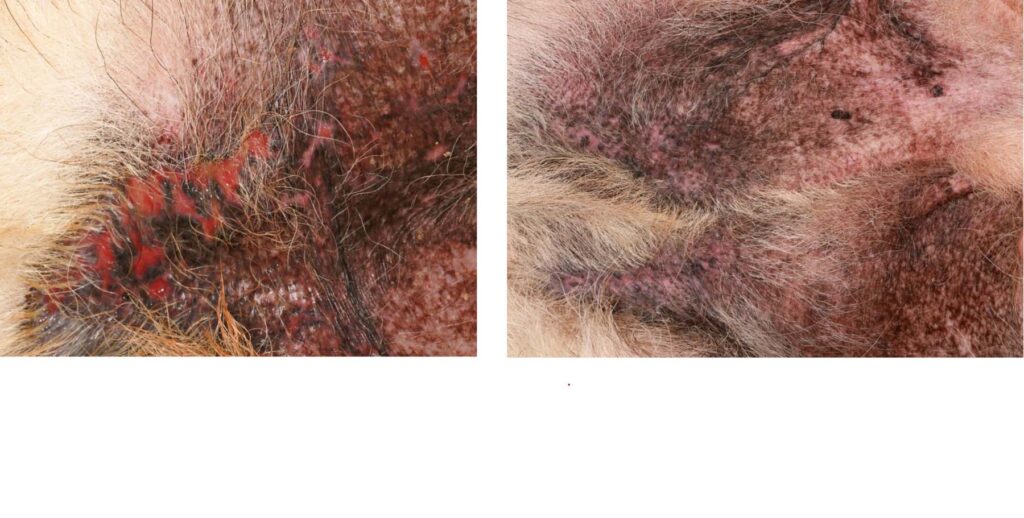
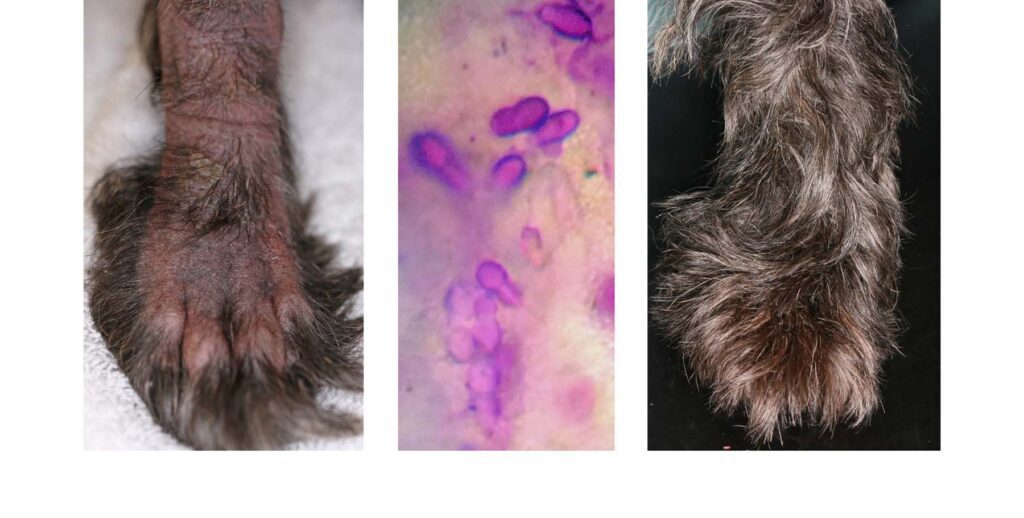
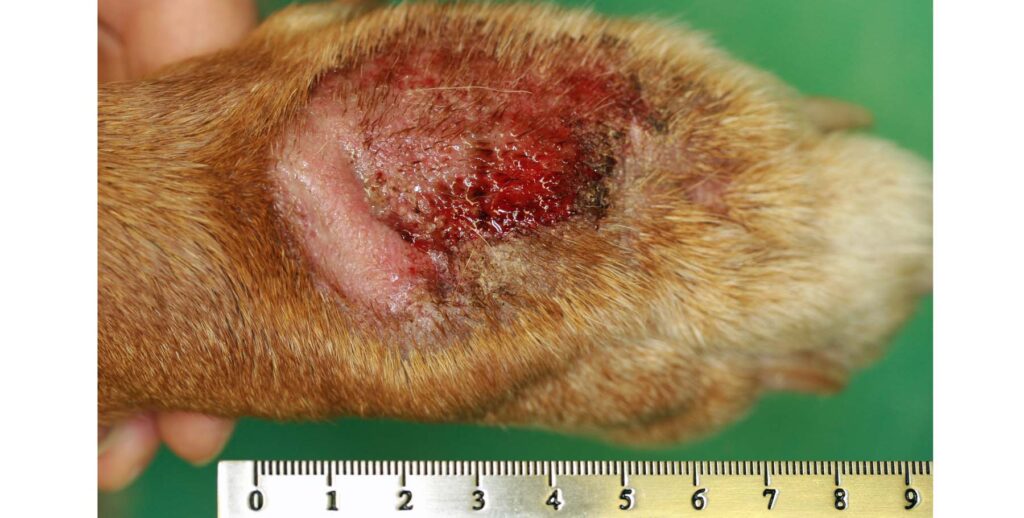
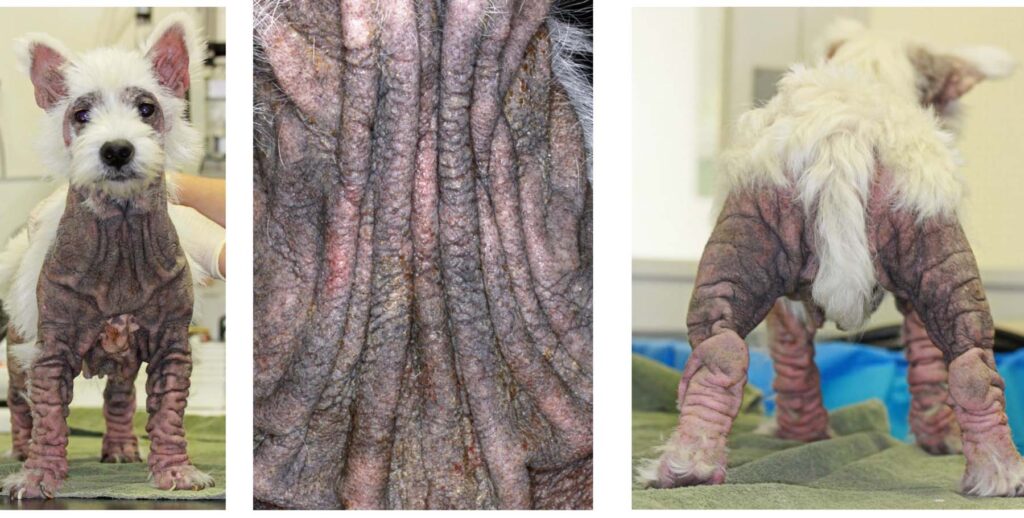
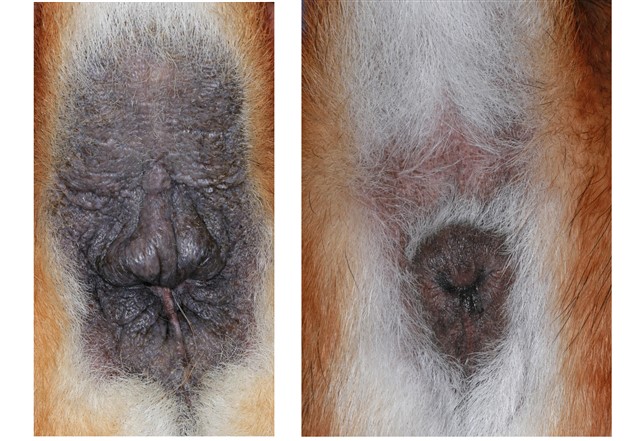
Nowadays in the UK the most common reason for itch is allergy & the most common allergy if canine atopic dermatitis & the feline equivalent – atopic skin syndrome…
Allergic reactions, or hypersensitivities, occur when an individual’s immune system reacts inappropriately to a normal substance in the environment. These substances, or allergens, include flea saliva, dietary protein & environment allergens. The immune system mistakes these allergens for an infectious agent. The reactions occur when the allergen contacts the skin, is eaten or is breathed in. The allergen is recognised by specific antibodies, these combine with various cells, these cells produce a cascade of many chemicals that produce inflammation. With skin allergies this inflammation causes itching. The most allergic dogs and cats have one, or a combination of these three conditions: Flea Bite Hypersensitivity, Cutaneous Adverse Food Reactions and Atopic Dermatitis (environmental or aero-allergens).
Differentiation & diagnosis of these 3 conditions, alongside control of concurrent infestations or secondary microbial imbalances, follow well-established international Clinical Guidelines [ Click Here To Access ] plus validated criteria but does not include ‘allergy tests’.
The latter condition is the most common cause if pruritic (itchy) skin disease in the UK dogs. Conservative estimates are that 10% of the canine population suffer with atopic dermatitis to some degree. There are many similarities with human atopic dermatitis (atopic eczema) but also some notable differences – dogs do not grow out of this condition, as do a significant proportion of children, but many of them do respond to allergen-specific immunotherapy (ASIT) [ Click Here To Access ].. Atopic humans may not respond as well to ASIT but those with allergic rhinitis (hayfever) or insect venom hypersensitivity do.
A live audience-response survey of 125 GP Vets – ‘Clinical Management of Canine Atopic Dermatitis in private veterinary practice’ was presented at ESVD Congress in Lille, in August 2026, by Florence Tönz & her Swiss colleagues. The survey discussion suggests a gap between guideline recommendations & daily practice, with diagnostic gaps including lack of, or inconsistent, cytology & limited, well-timed allergy testing. Symptomatic anti-itch (antipruritic) therapy dominated, while barrier support & immmunotherapy were underused. It concluded that continuing education should emphasise practical diagnostic algorithms, routine cytology & earlier candidate identification for immunotherapy
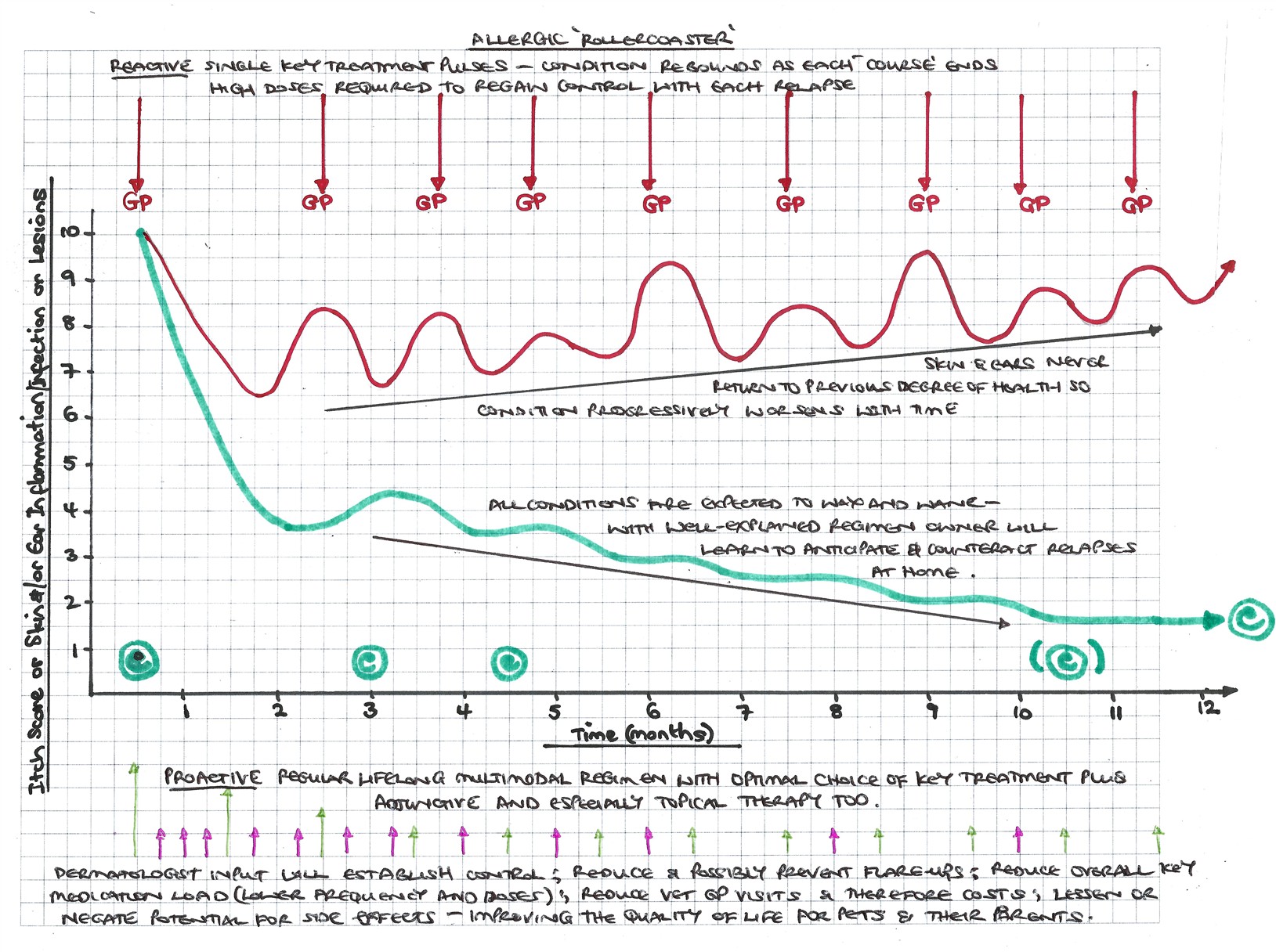
Allergic Rollercoaster
Treatments given for each bout of infection (reactive) give short-term relief, but ignore the ongoing inflammation [the upper red line with irregular red treatment arrows]. Reactive management will not control the ongoing chronic inflammatory changes causing more frequent & severe infections. This approach actually results in the use of higher doses of, & total amount of, anti-inflammatory drugs increasing the possibltiy of side effects. It reduces the pet’s quality of life, increases the number of visits to the vet & ultimately costs the owner more time & money. Additionally the increased use of oral antibacterial courses encourage development of resistant skin microbes.
Successful tong-term (pro-active) management of atopic dermatitis, requires ongoing, regular, anti-inflammatory treatment to maintain remission & prevent relapses especially secondary microbial infection (bacteria &/or yeast). Such proactive therapy [the lower green line with regular lime green & magenta treatment arrows] gives much better control and improved quality of life, which in the long term is also cheaper for the client.
Proactive Plan
I will outline a pro-active, long-term, multimodal treatment regimen¹ for each individual allergy case I am referred. A tailored, dynamic sequential and multi-modal management plan is needed for each individual dog throughout their left stages & the evolution of their condition. The management & treatment plan will include advice on:

oral or topical ectoparasite control – dependent on previous & likely future exposure; number & species of in-contact domestic pets, lifestock wildlife; confirmed, or putative, concurrent flea bite hypersensitivity http://www.theskinvet.net/downloads-links/372-2/
environmental ectoparasite control – household & vehicular
evidence-based, targeted nutrition – tailored to age, previously proven intolerances, client & pet preferences http://www.theskinvet.net/nutrition-hypoallergenic-raw-etc/atopic-dermatitis-diets/
whole body/barrier restoring topicals – whole body washes, leave-on mousses, wipes & sprays – to re-establish & maintain skin barrier function which reduces allergen penetration, microbial invasion, trans-epidermal water loss http://www.theskinvet.net/downloads-links/372-2/
antimicrobial topicals – whole body washes, leave-on mousses, spot gels, sprays & wipes – to counter the microbial imbalance (increased proportions of of various Staphylococcus bacteria species & Malassezia yeast) & re-establish a normal bacterial & fungal microbiome (systemic antimicrobial treatments will be avoided whenever possible, & will not be employed in the long term – see http://www.theskinvet.net/veterinary-surgeons/bacterial-pyoderma/
aural cleansing ± (truly) topical anti-inflammatory – dependent on frequency, severity & chronicity of previous secondary infections – with dedicated avoidance of intermittent ‘trickle-treating’ with polypharmacy medications – see
http://www.theskinvet.net/clients/recurrent-ear-infections/
allergen specific immunotherapy- individual prescription based on combined serological & intradermal testing – see
http://www.theskinvet.net/clients/immunotherapy-for-atopic-pets/
systemic immunomodulation (antipruritic and/or anti-inflammatory) – dependent on severity of condition, pet compliance & quality of life considerations, client preference, previous efficacy, degree of side effects – such as mast cell membrane stabilisers, glucocorticoids, calcineurin inhibitors, janus kinase inhibitors or an IL-31 monoclonal antibody http://www.theskinvet.net/downloads-links/372-2/
allergen avoidance methods
¹I have complete clinical freedom from corporate practice-prescribing constraints.